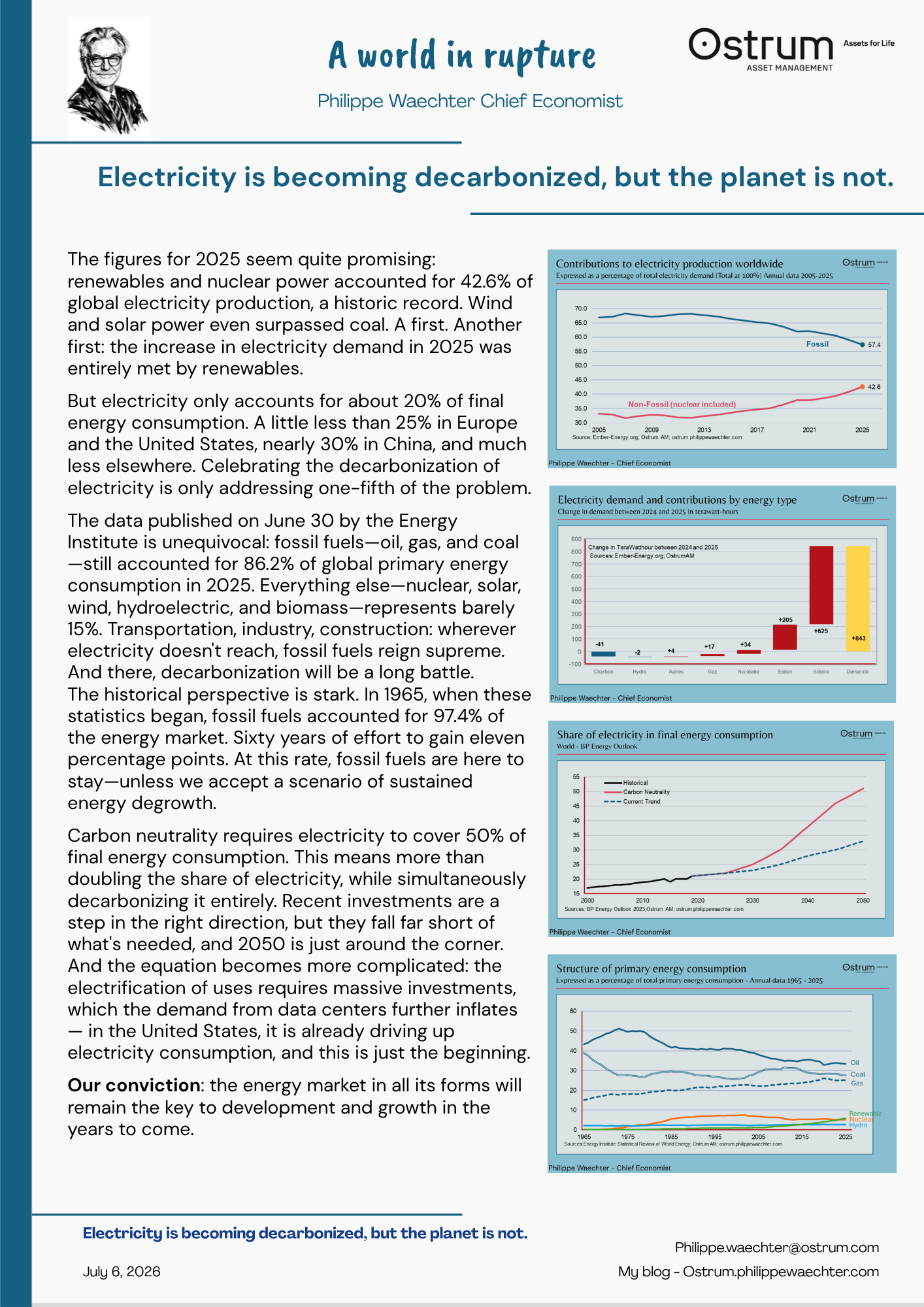


The figures for 2025 seem quite promising: renewables and nuclear power accounted for 42.6% of global electricity production, a historic record. Wind and solar power even surpassed coal. A first.
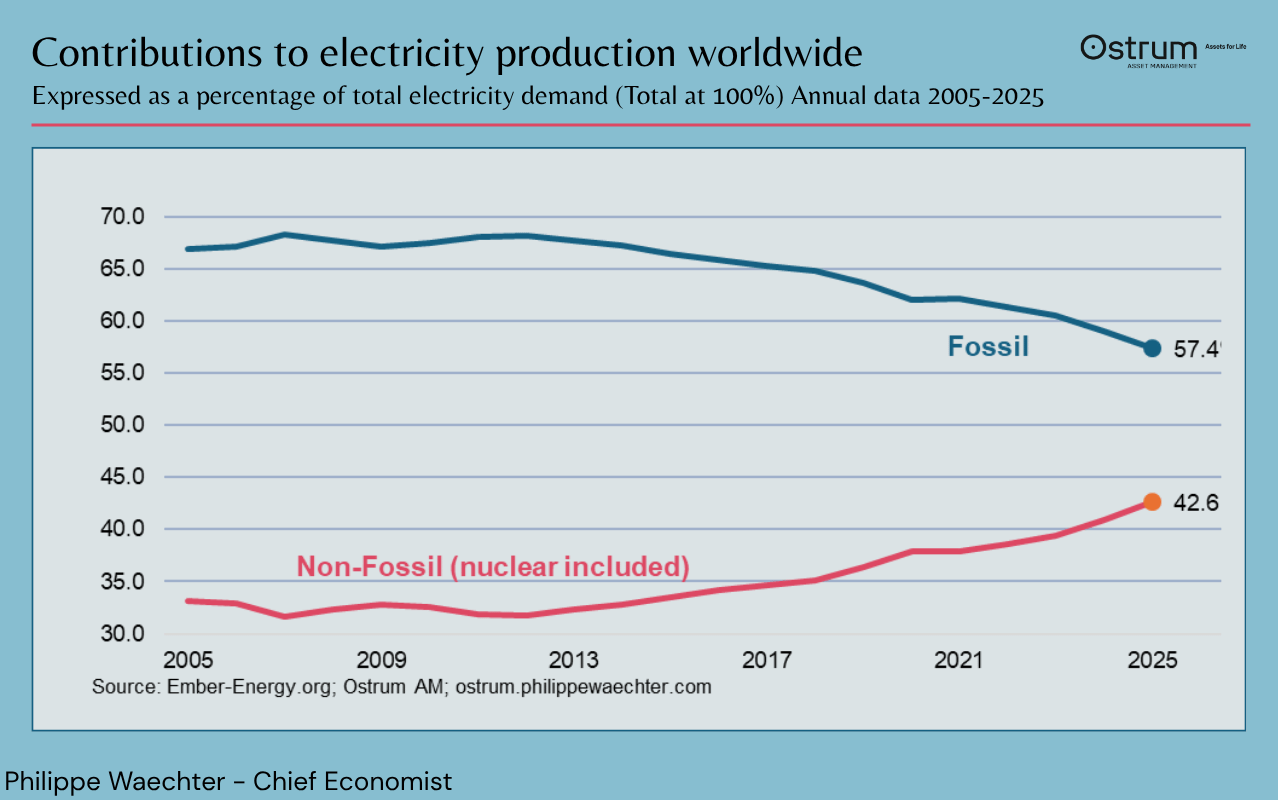
Another first: the increase in electricity demand in 2025 was entirely met by renewables.
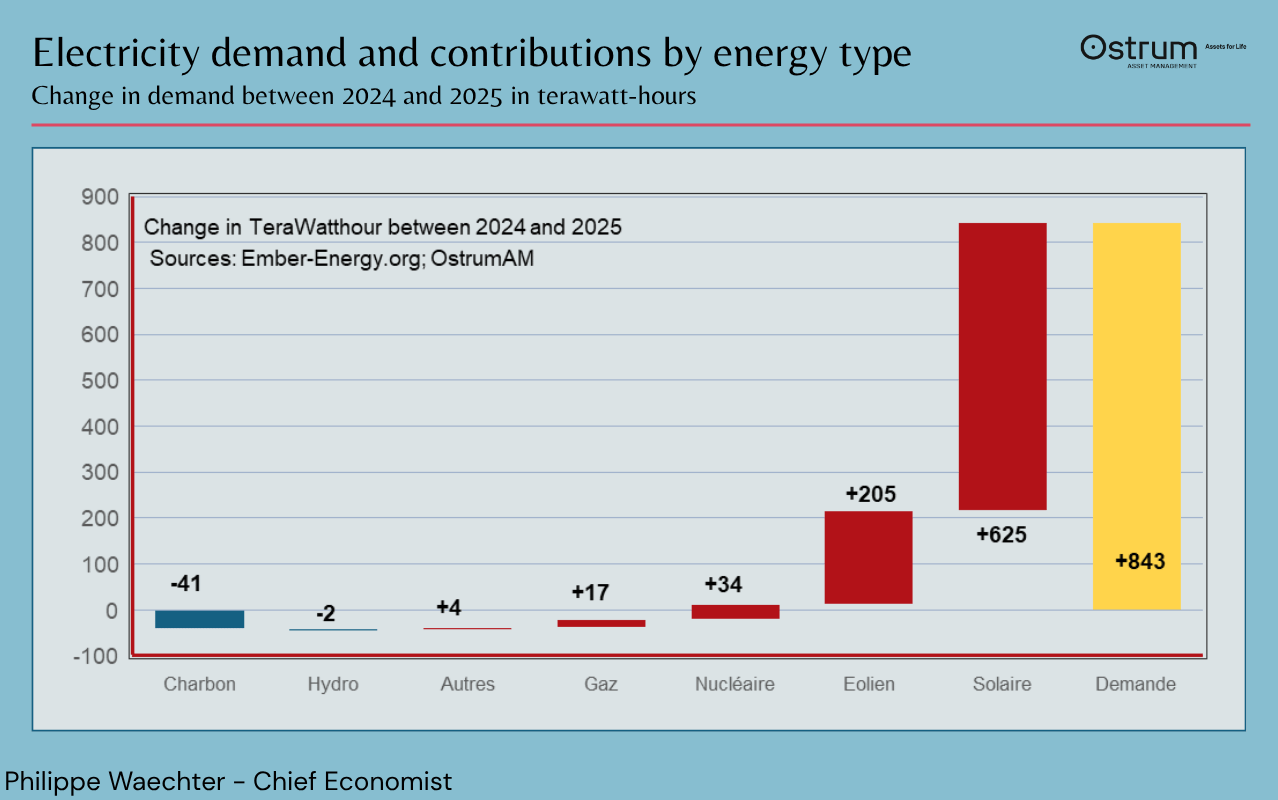
But electricity only accounts for about 20% of final energy consumption. A little less than 25% in Europe and the United States, nearly 30% in China, and much less elsewhere.
Celebrating the decarbonization of electricity is only addressing one-fifth of the problem.
The data published on June 30 by the Energy Institute is unequivocal: fossil fuels—oil, gas, and coal—still accounted for 86.2% of global primary energy consumption in 2025. Everything else—nuclear, solar, wind, hydroelectric, and biomass—represents barely 15%. Transportation, industry, construction: wherever electricity doesn’t reach, fossil fuels reign supreme. And there, decarbonization will be a long battle.
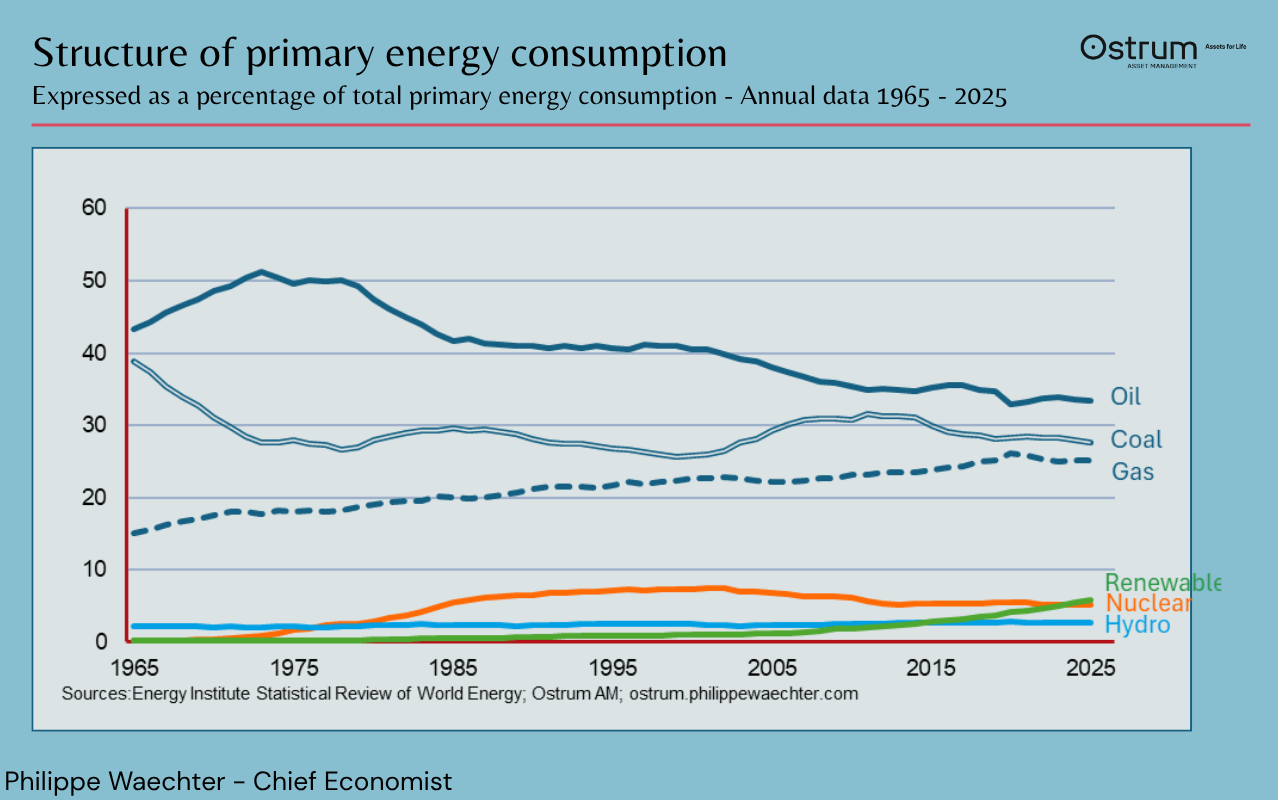
The historical perspective is stark. In 1965, when these statistics began, fossil fuels accounted for 97.4% of the energy market. Sixty years of effort to gain eleven percentage points. At this rate, fossil fuels are here to stay—unless we accept a scenario of sustained energy degrowth.
Carbon neutrality requires electricity to cover 50% of final energy consumption. This means more than doubling the share of electricity, while simultaneously decarbonizing it entirely. Recent investments are a step in the right direction, but they fall far short of what’s needed, and 2050 is just around the corner.
And the equation becomes more complicated: the electrification of uses requires massive investments, which the demand from data centers further inflates — in the United States, it is already driving up electricity consumption, and this is just the beginning.
Our conviction: the energy market in all its forms will remain the key to development and growth in the years to come.
Philippe Waechter is Ostrum AM chief economist in Paris