

Global trade is growing rapidly. In volume terms, it increased by 5.6% year-on-year in the second quarter of 2026. This is better than the previous year’s 3.9% increase and better than the overall growth for 2025, at 4.3%. This is the strongest increase since the end of the pandemic.
Associated with this acceleration is inevitably a solid dynamic in economic activity. Geopolitical uncertainties, oil prices, or even White House tariffs have not stifled this surge in trade.
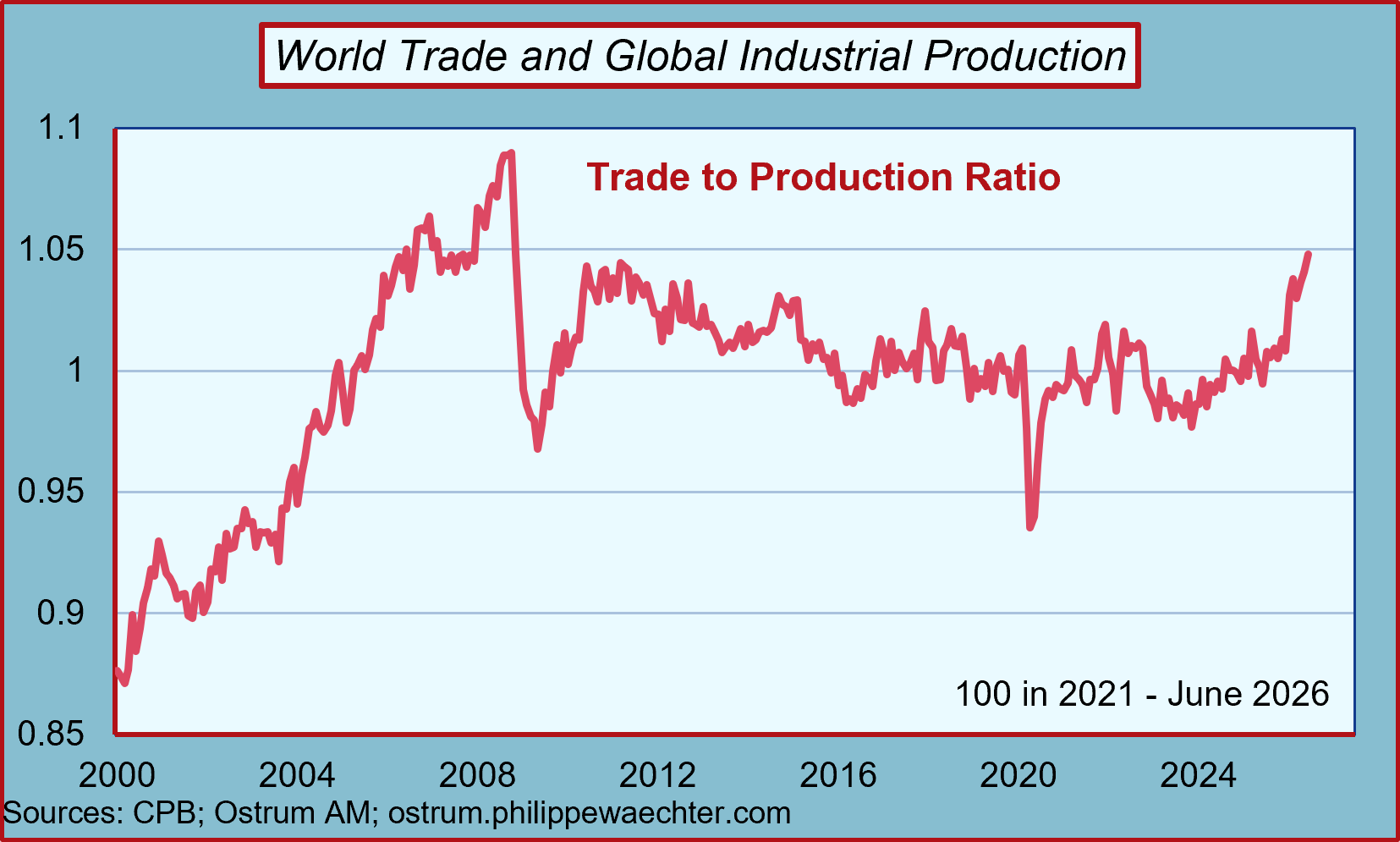
This shift in dynamics can be seen by observing the relationship between international trade volume and industrial production. Since the fall of 2025, the trend has changed. The increase in trade will necessarily translate into a faster growth in industrial production
The geography of trade
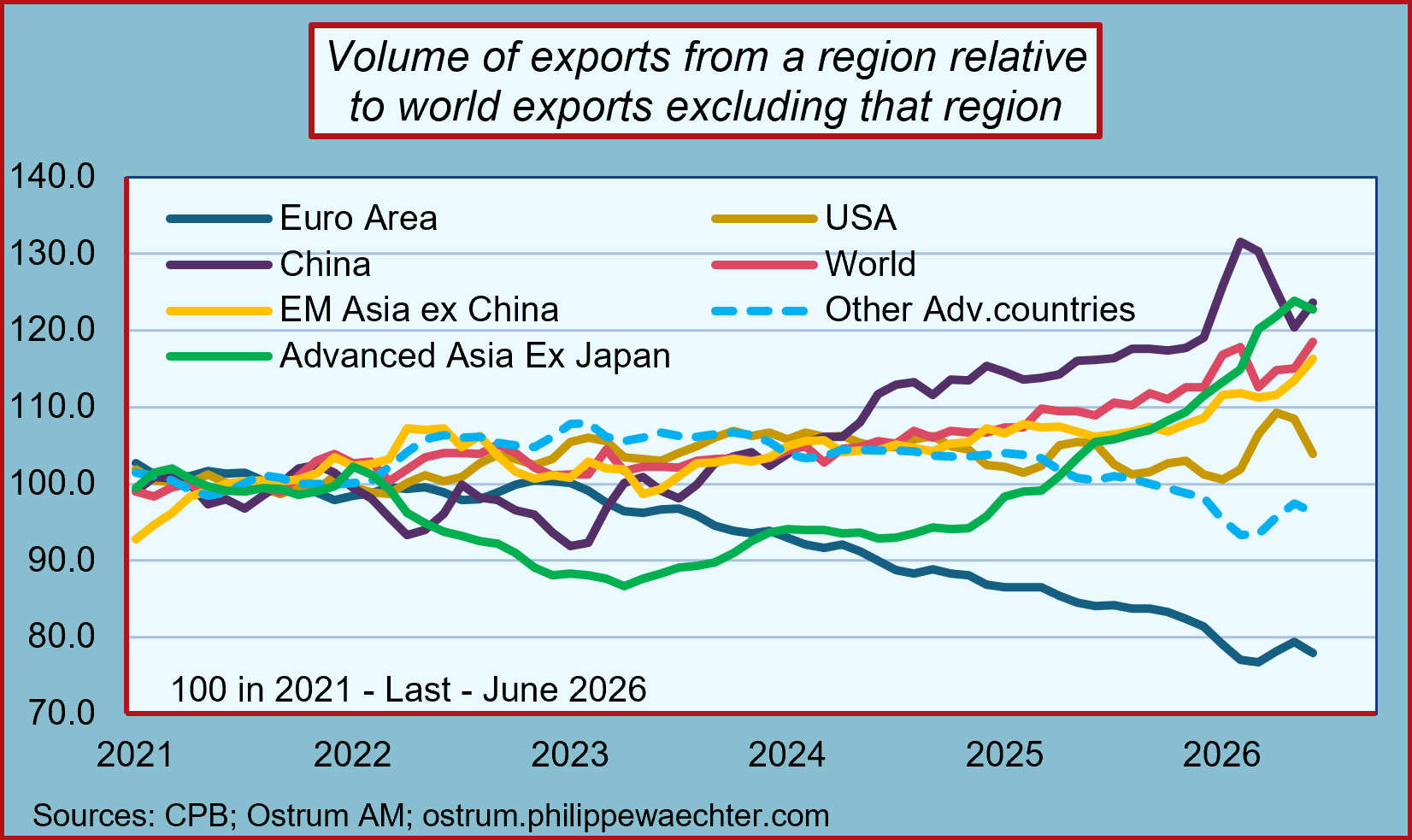
In the second graph relating to the dynamics of exports in volume, we note that the developed countries, USA, other advanced countries and Eurozone, are not part of the party.
The world is focused on Asia. China, emerging Asia (excluding China), and the advanced Asian economies (Taiwan, South Korea, Singapore, and Hong Kong) are all progressing rapidly. Trade is accelerating, particularly in the advanced Asian economies. Japan, not shown on the graph, is also not participating in this growth.
It is particularly noticeable that European products do not really interest the rest of the world. Europe is going it alone; the world is moving forward without it.
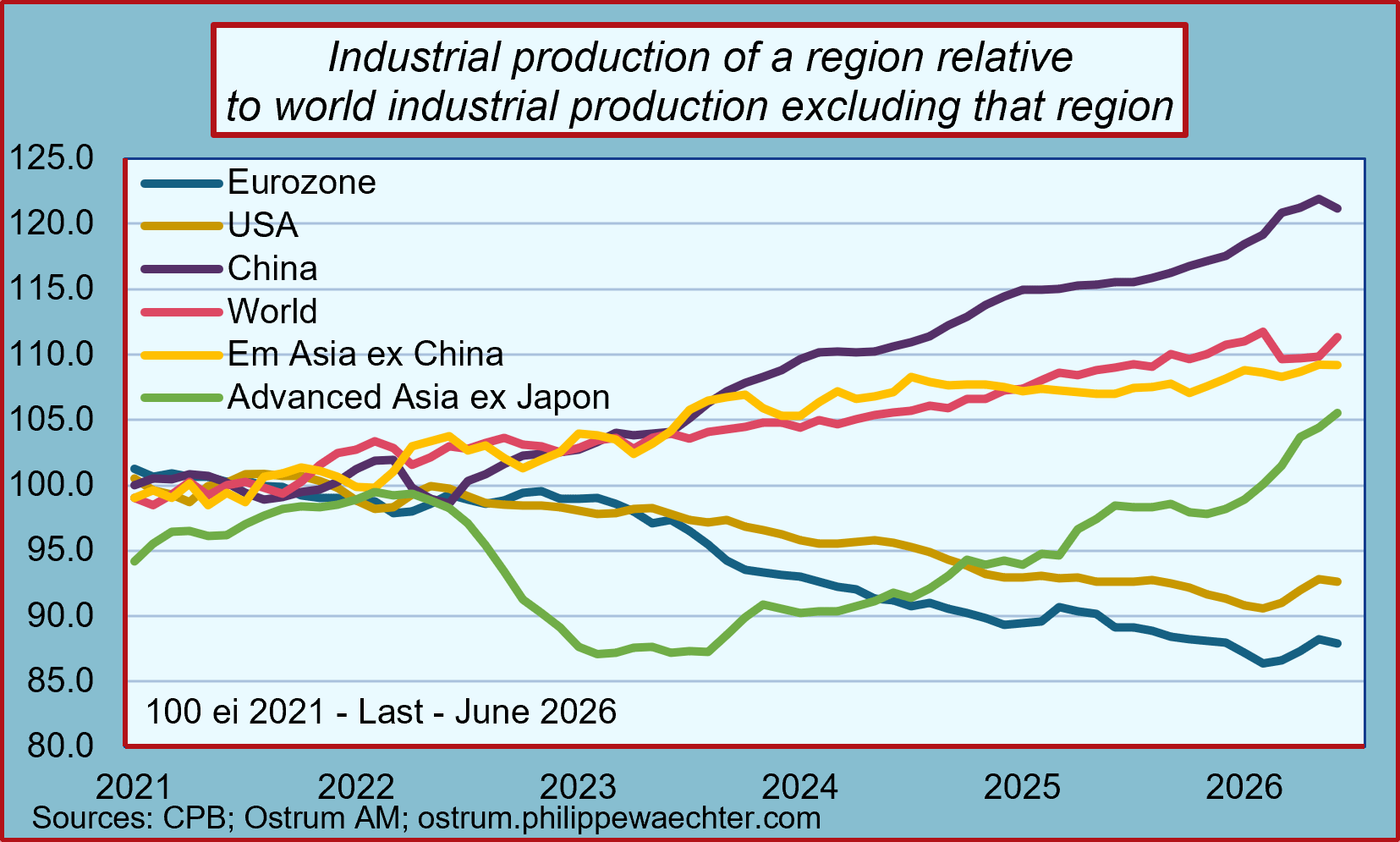
The dynamics of industrial production are quite similar. It should be noted that despite Washington’s very proactive policy, American production is not exactly taking off. Industrial policy may not be the answer to everything.
Behind all this lies the exchange of products linked to technological revolutions. There is the AI revolution, but there is also the electrification necessary to facilitate the energy transition.
The matrix of the global economy is ultimately simple. Asia innovates, produces, and offers products that the entire world needs. China has a form of leadership, but it is not alone. There is a kind of cluster that will wield significant bargaining power vis-à-vis the rest of the world. This shift is the most important.
And the figures confirm all the analyses of Asia’s new power. This does not mean, however, that the region is homogeneous and that it will function together in the long term. Nevertheless, it is a period of a kind of common interest.
And Europe is looking elsewhere, despite warnings about climate change and innovation. Europe is primarily seeking purchasing power, whereas this is a revolution that must begin with supply before generating purchasing power.
Share Philippe Waechter’s Economic Posts