
Ostrum
  • News & Chronicles
  • France
  • Euro Area
  • United States
  • International
  • Politics & Society
  • Monetary Policy
  • Media
  • Decoding
  • About Philippe Waechter
Philippe Waechter's blog
  • Insights
  • About us
  • Expertise
  • Our people
  • Media

Philippe Waechter's blog
My french blog
  • News & Chronicles
  • France
  • Euro Area
  • United States
  • International
  • Politics & Society
  • Monetary Policy
  • Media
  • Decoding
  • About Philippe Waechter
  • News & Chronicles
  • Climate
  • France
  • Euro Area
  • United States
  • International
  • Politics & Society
  • Monetary Policy
  • Media
  • Decoding
Philippe Waechter's blog
Prévôté
Previous
  • 2 min

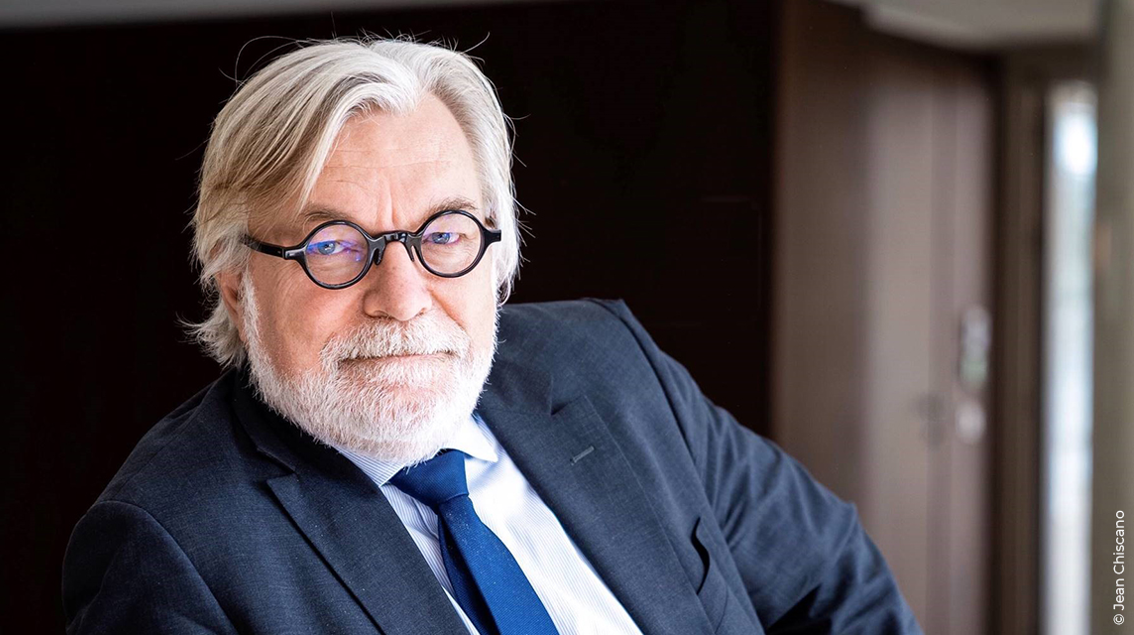
Markus Brunnermeier at the ECB

  • 27 November 2026
  • Philippe Waechter
  • ECB
  • Monetary Policy
Total
0
Shares
0
0
0

I first encountered the work of Markus Brunnermeier—who will become the chief economist of the ECB on June 1, 2027—in an academic publication during the Great Financial Crisis. 

To set the scene: the subprime mortgage crisis had caused widespread damage; the bank Northern Rock had been nationalized by the Bank of England, and the collapse of Lehman Brothers had triggered a massive, seismic shock. 

At the time, everyone was searching for a way to understand what had happened—why things had unfolded the way they did. For economists and investors, upheaval and sudden, disruptive shifts had become the daily norm, making it difficult to find one’s bearings.

In 2009, Markus Brunnermeier published an article on the financial crisis in the *Journal of Economic Perspectives*. Suddenly, the situation came into focus, and various points that had been vague or obscure took on clear, distinct shape. Whenever I need to revisit the financial crisis, this twenty-page text is what I turn back to.

Today, Brunnermeier is concerned about the situation in Europe and Germany. In a recent book, he argues for the need to move beyond the stable model—in which both Germany and Europe once thrived—and adapt to the far less predictable world that now surrounds us. He speaks of “resilience,” which he defines as the capacity to reinvent oneself while preserving social cohesion. His ideas address both Germany and Europe, as he views Europe as the essential scale for such analysis.

The eurozone is a complex construct, situated within a framework where the old points of reference must be rethought. Internally, sluggish growth is likely to generate significant political tensions, which could, in turn, weaken the European monetary project. In relation to the rest of the world, the euro must assert itself—thereby giving substance to Europe—within a global landscape that is now neither cooperative nor friendly.

The challenges facing all countries in the euro area are significant. The choices that lie ahead must be clearly explained.

In these complex times, it is essential that everyone is able to engage with the challenges the euro area will have to confront. I believe Brunnermeier is an indisputable choice—not only for fulfilling a highly institutional role (after all, central banking is a serious matter), but also for defining what the euro area might look like in the future. Businesses need this, investors require clarity, and consumers, employees, and voters alike must be able to thrive within this framework.

his 2009 paper can be round here https://markus.scholar.princeton.edu/sites/g/files/toruqf2651/files/liquidity_credit_crunch_0.pdf

Related Topics
  • ECB
  • Monetary Policy
Subscribe to the newsletter

All the news from Philippe Waechter’s blog in your mailbox


Loading

Le magazine d’experts d’Ostrum

ABOUT OSTRUM AM
  • About us
  • Media room
  • Our publications
  • Cookie Policy (EU)
FOLLOW ME ON
EXTERNAL LINKS
  • Economists
  • Think tank
  • Central banks
  • Blog roll
©Ostrum AM 2026
An affiliate of : Plan de travail 2

Input your search keywords and press Enter.

Manage Cookie Consent

To provide the best experiences, we use technologies such as cookies to store and/or access information on devices. Consenting to these technologies will allow us to process data such as browsing behavior or unique IDs on this site. Not consenting or withdrawing consent may negatively affect certain features and functions.

Functional Always active
The technical storage or access is strictly necessary for the legitimate purpose of enabling the use of a specific service explicitly requested by the subscriber or user, or for the sole purpose of carrying out the transmission of a communication over an electronic communications network.
Preferences
The technical storage or access is necessary for the legitimate purpose of storing preferences that are not requested by the subscriber or user.
Statistics
The technical storage or access that is used exclusively for statistical purposes. The technical storage or access that is used exclusively for anonymous statistical purposes. Without a subpoena, voluntary compliance on the part of your Internet Service Provider, or additional records from a third party, information stored or retrieved for this purpose alone cannot usually be used to identify you.
Marketing
The technical storage or access is required to create user profiles to send advertising, or to track the user on a website or across several websites for similar marketing purposes.
  • Manage options
  • Manage services
  • Manage {vendor_count} vendors
  • Read more about these purposes
View preferences
  • {title}
  • {title}
  • {title}